

Nutrition for dogs

  1. How often should my puppy be fed?

    How often a puppy should be fed per day depends mainly on its age. In puppies, the daily ration is divided into more meals; in young dogs it is less.

    ...

  2. How long should my dog be fed with puppy food?

    When a puppy moves in with a new family, there are many things to consider. One important decision concerns the food & the question of how long your dog should be given puppy food. All information can be found here!

    ...

  3. How much food should my puppy receive?

    The amount of food a puppy or young dog should be given depends on various factors. It is not only important whether I have chosen a food for a large or a small dog breed. You can find out how much food your puppy should be given here.

    ...

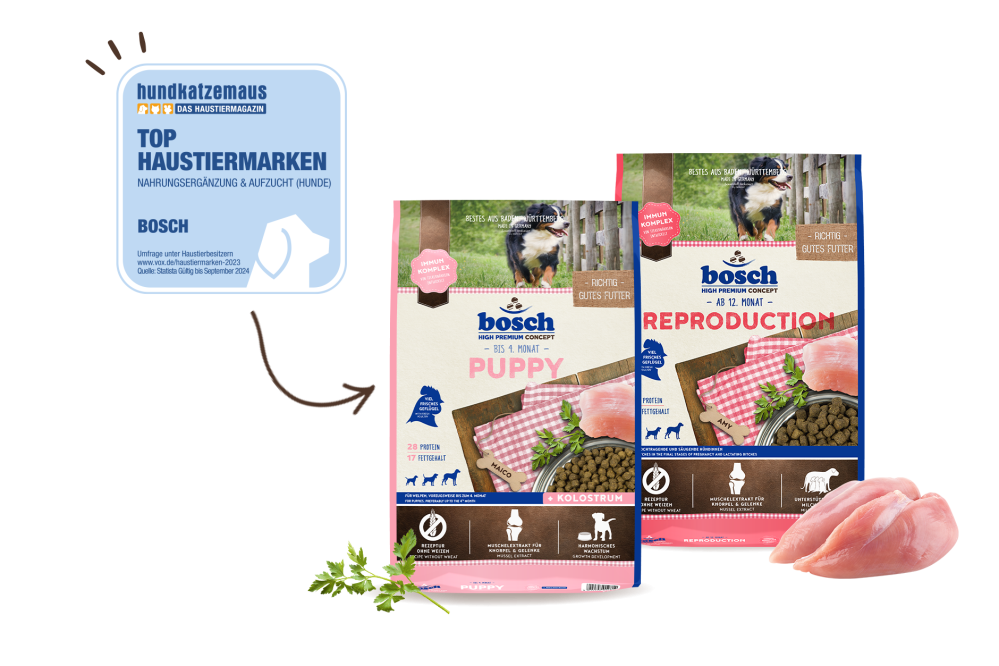
  4. bosch pet food was named "Top Pet Brand 2023" by hundkatzemaus

    "hundkatzemaus – das Haustiermagazin" and the renowned market research institute Statista have named bosch pet food as one of the "Top Pet Brands in Germany 2023" in the category "Nutritional Supplements & Breeding (Dogs)". 

    ...

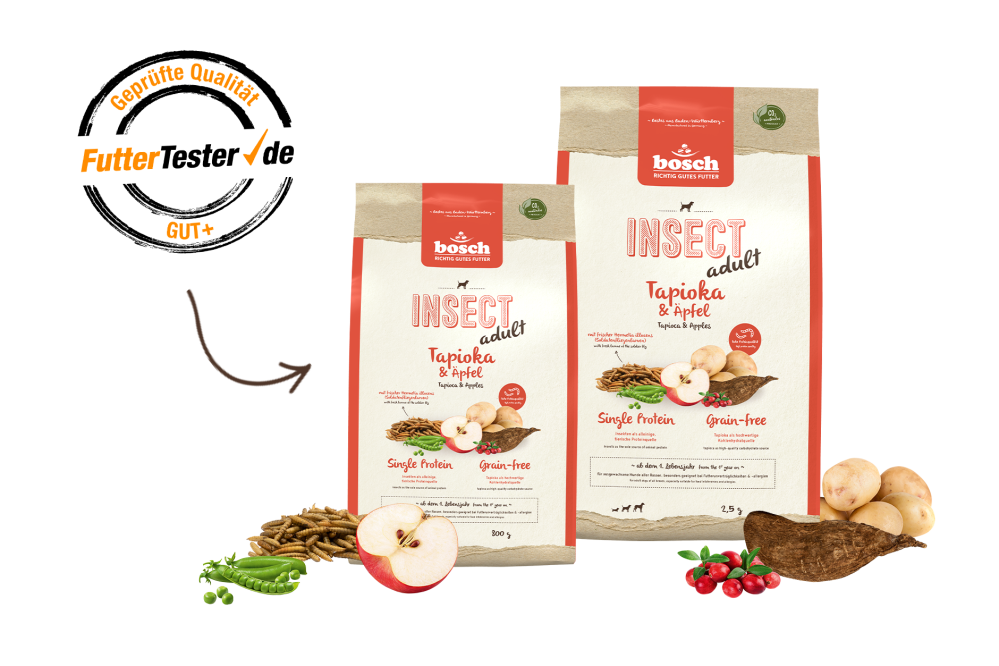
  5. Awarded "Good+" by FutterTester.de - HPC INSECT Adult Tapioca & Apples

    The first independent German recommendation marketing portal for pet food "FutterTester.de" and 200 demanding pets have rated our HPC Insect Adult Tapioca & Apples with 9 out of 10 possible stars, which corresponds to the grade "Good+".

    ...

  6. Mixed feeding in dog nutrition

    In this article, you can find out what mixed feeding can look like in order to reduce the CO2 pawprint.

    ...

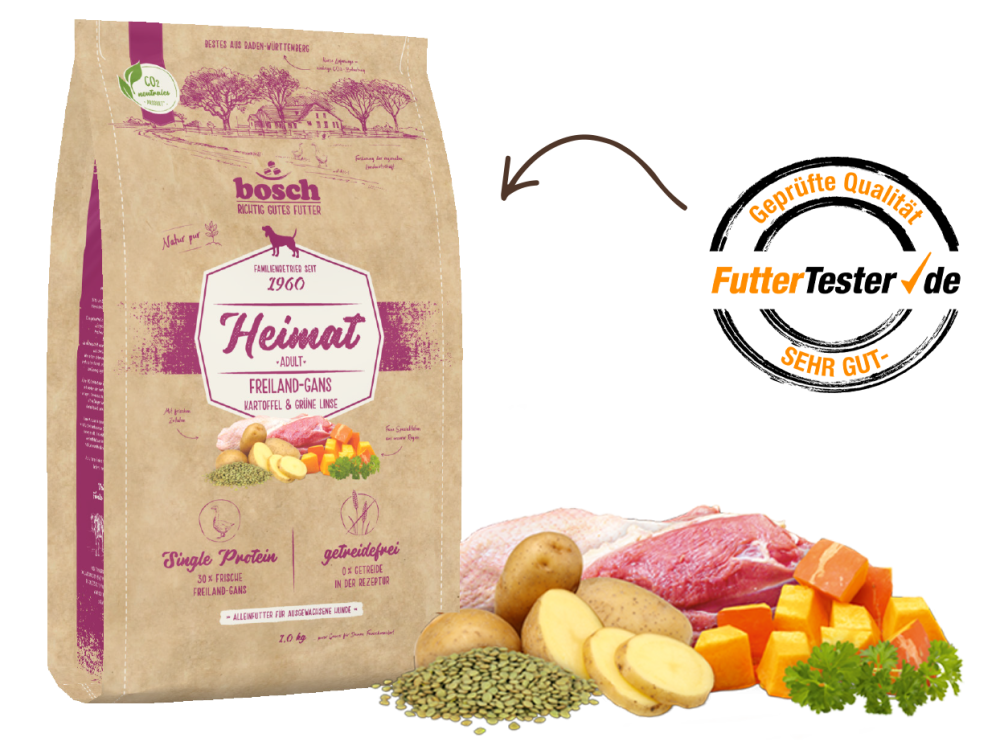
  7. Awarded "Very good+" by FutterTester.de - Heimat Adult free-range goose

    The first independent German recommendation marketing portal for pet food "Futtertester.de" and 200 demanding fur noses have rated our Heimat Adult fresh free-range goose with 9.3 out of 10 possible stars, which corresponds to the grade "Very good -".

    ...

  8. Dry food has the best environmental footprint - CO2 footprint of dogs and cats

    The impact of pet food for dogs and cats on our environment was examined in a scientific report published in the journal "Nature". The so-called 'Scientific Report' from the University of São Paulo compares the environmental impact of the production of dry food, wet food and home-prepared pet food. The analysis is made up of the CO2 balance, water consumption and sulphur dioxide emissions of the individual products.

    ...

  9. Contract farming of tapioca

    What is tapioca?

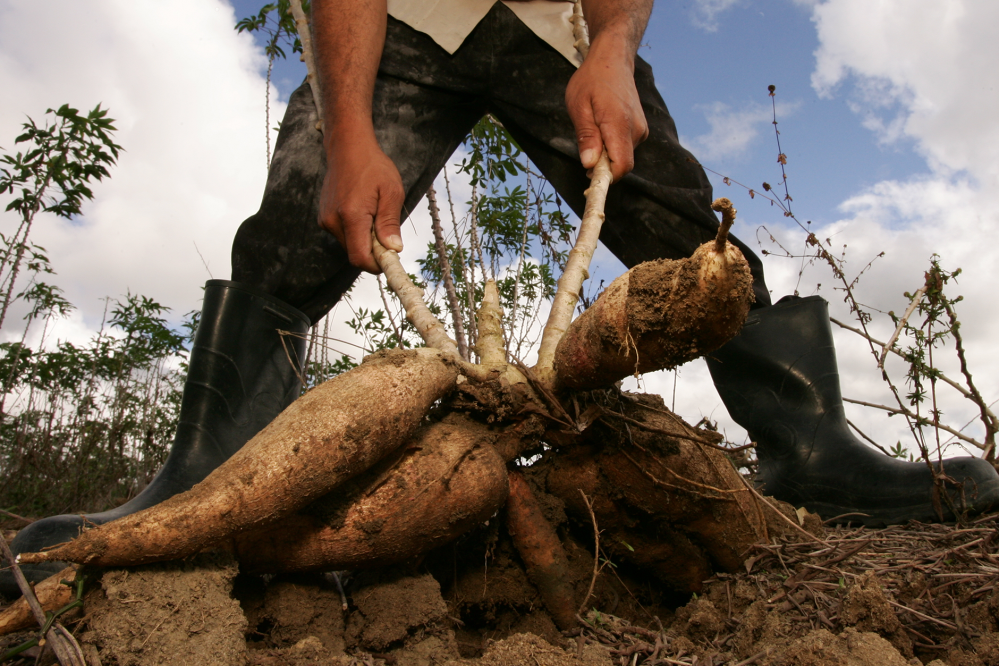
    Tapioca is a starch obtained from the roots of the cassava plant. Cassava is a tropical plant that is mainly grown in South America, Africa and Asia. To produce tapioca starch, the cassava roots are ground or grated. The resulting flour is then washed to separate the starch from other components. It is then dried and processed into a fine flour.

    ...

  10. Feeding recommendations - How much food does my dog ​​need?

    The amount of feed required depends on various factors. In addition to the age, size and weight of your furry friend, the type of food is particularly important.

    Depending on their composition and the manufacturing process used, feedstuffs have very different specific weights and volumes. For example, dry food has much of its moisture removed during the manufacturing process, which means it has a very small volume with a high nutrient density and the meals look very small in comparison.

    ...

Really good dog & cat food

Family business since 1960

Sustainable production

From our homeland

Pet food without

Regional raw materials

Pet food without animal testing